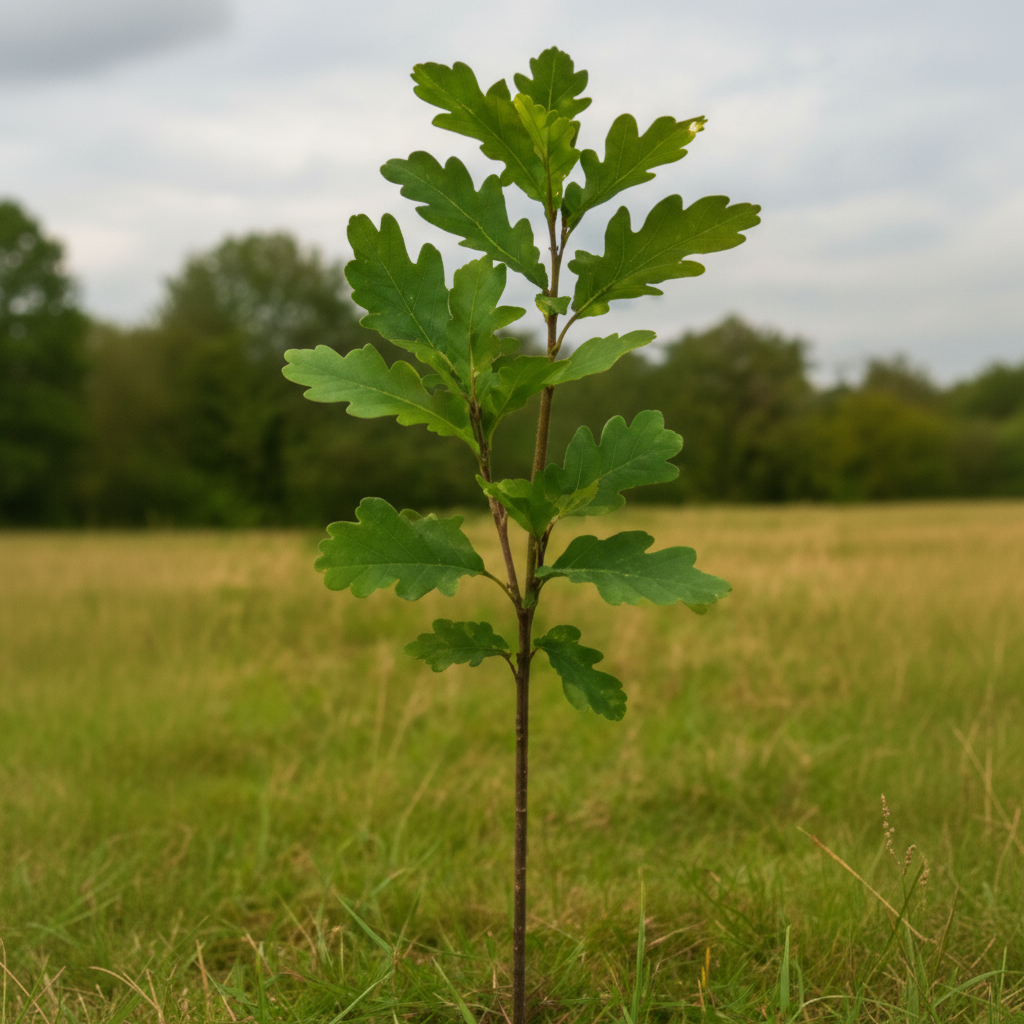
Hungarian oak (Quercus frainetto)
Couldn't load pickup availability
The Hungarian oak is a large, majestic tree reaching 25–40 meters, known for its broad, imposing crown and robust appearance. It typically develops a wide, irregular canopy, creating strong visual impact in open landscapes. Its leaves are large, deeply lobed, and often very long—one of the most distinctive leaf shapes among European oaks. The bark becomes thick and deeply furrowed with age, giving the tree a powerful, ancient character.
Natural range
Hungarian oak is native to southeastern Europe, particularly:
-
Hungary
-
the Balkans
-
parts of Italy and the northern Mediterranean region
It naturally grows in warm, sunny lowlands and foothills, often on heavy, clayey or nutrient-rich soils. The species is well adapted to hot summers and seasonal droughts.
Recommended uses
Thanks to its size and exceptional heat tolerance, Hungarian oak is suitable for:
✔ large parks and open landscapes
✔ landscape restoration in warm regions
✔ wide avenues and rural plantings
✔ climate-adaptation projects in Central and Southern Europe
✘ not suitable for narrow streets or confined urban spaces
This oak is ideal where a long-lived, monumental species is desired.
Sowing
Acorns should be sown:
-
in autumn, when natural cold stratification ensures optimal germination, or
-
in early spring, if stratified during winter
Both methods support reliable sprouting.
Growing conditions
Hungarian oak performs best in:
-
deep, fertile, clayey soils
-
warm climates with hot summers
-
full sun, as it is light-demanding
-
areas with moderate drought—it tolerates summer dryness better than many other large oaks
However, it does not thrive in poor, very dry, or extremely rocky soils, unlike some smaller Mediterranean oak species.
Ecological value
Hungarian oak plays an important ecological role in warm-temperate landscapes:
-
supports a wide range of insects, including numerous specialist species
-
contributes to biodiversity in oak woodlands
-
stabilizes soils and helps maintain healthy forest structure
-
offers food (acorns) for birds and mammals
Because of its resilience to heat and changing climate, it is considered a valuable species for future-oriented forestry and landscape planning.