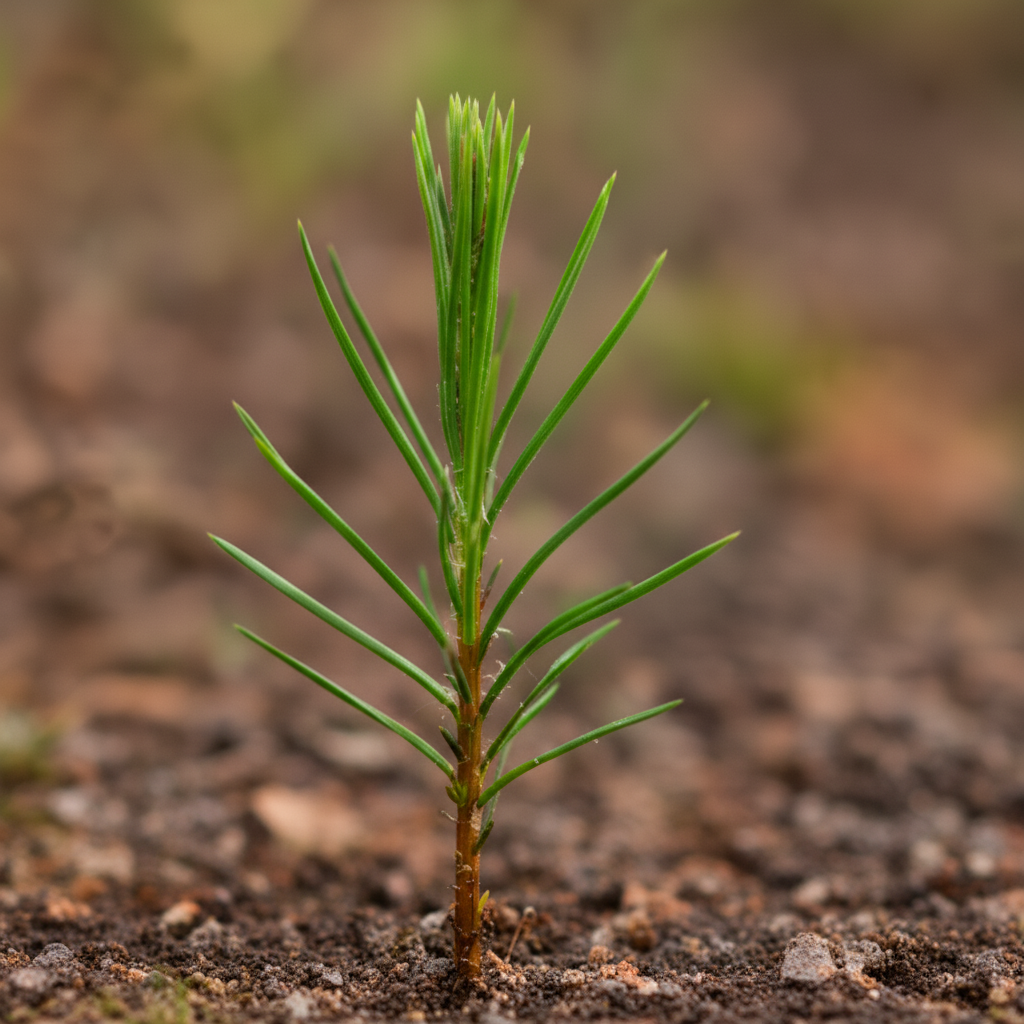
Aleppo pine (Pinus halepensis)
Couldn't load pickup availability
Aleppo pine is a medium-sized conifer reaching 10–20 meters, known for its ability to grow where most trees cannot survive. Its irregular, very open crown creates a light, airy silhouette typical of Mediterranean landscapes. The needles are 5–12 cm long, soft, fine and light green.
The trunk is often twisted, giving the tree its characteristic, naturally sculptural appearance.
Natural range
The Aleppo pine originates from warm and dry regions of:
-
North Africa
-
Spain
-
Israel
-
the Balkans
It grows in rocky steppes, on sunny slopes, in coastal areas and at the edges of semi-deserts. It is one of the most iconic trees of the Mediterranean.
Recommended uses
The Aleppo pine is especially valuable where water is scarce and heat is extreme:
✔ hot, dry towns and villages
✔ Mediterranean parks and public spaces
✔ sandy, rocky and extremely poor soils
✘ not suitable for cold climates – it does not tolerate strong or prolonged winter frosts
It is one of the toughest trees for climatically stressed regions.
When to plant
Best planting time:
-
spring, giving young plants warmth and enough time to root before summer.
Growing conditions
The Aleppo pine is highly adapted to harsh environments:
-
excellent tolerance of long-term drought
-
grows in limestone, rocky, and highly drained soils
-
requires full sun
-
very resistant to wind and high temperatures
It is one of the few trees capable of thriving in extremely dry urban conditions.
Ecological benefits
In arid and Mediterranean landscapes, the Aleppo pine has significant ecological value:
-
stabilises dry slopes and erosion-prone soils
-
acts as a pioneer species on degraded land
-
provides shelter and food for birds, insects and other fauna
-
helps landscapes adapt to climate change
It is an ideal species for restoring dry habitats, stabilising soils and planting in cities faced with increasingly hot summers.