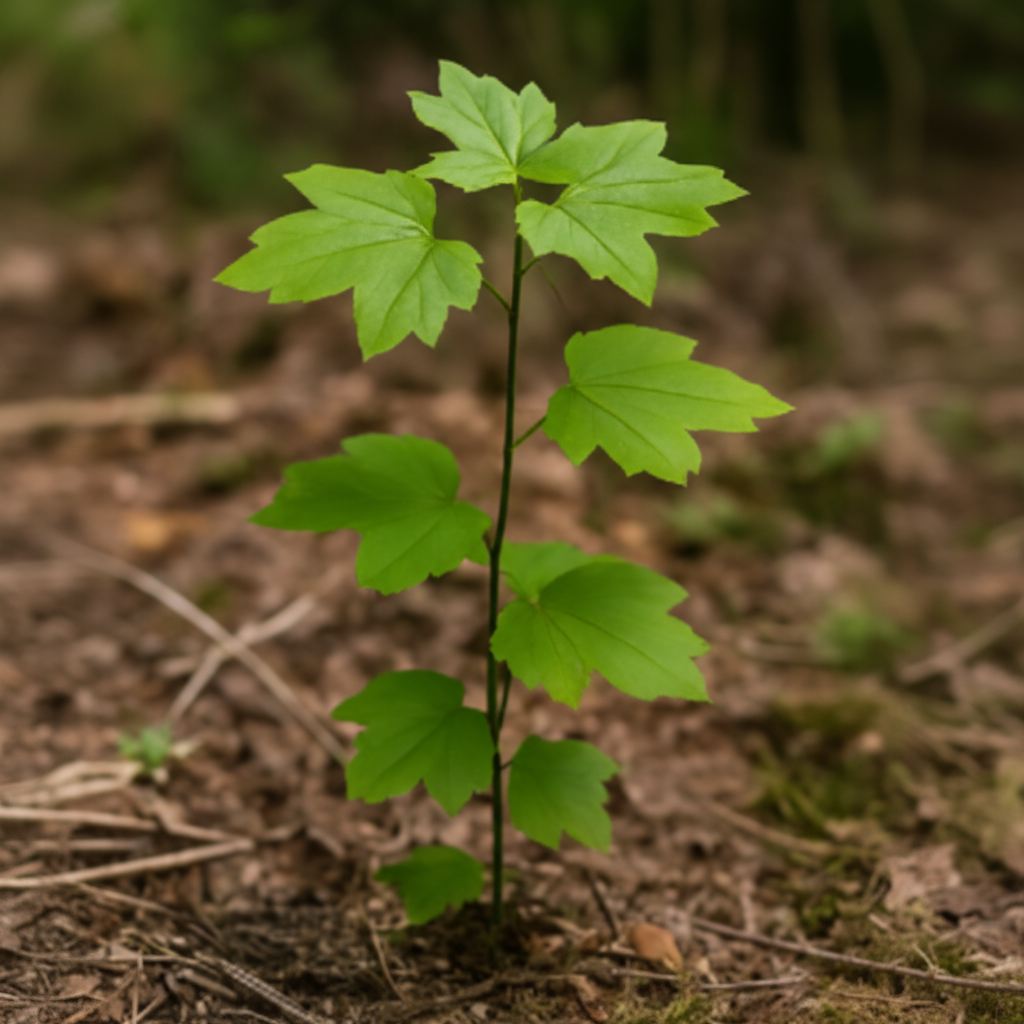
Field maple (Acer campestre)
Couldn't load pickup availability
The field maple is a medium-sized tree or large shrub reaching 10–20 meters, ideal for a wide range of plantings from urban streets to natural landscapes. It forms a rounded, compact crown that provides even shade and performs well even in dense development.
Its small, 3–5 lobed leaves with finely serrated edges remain decorative throughout the growing season. The thin grey trunk, which naturally fissures with age, gives the tree a modest, unobtrusive appearance suitable for modern green spaces.
Natural range and adaptability
The field maple is native throughout Europe, from Britain to the Balkans. It naturally grows in meadows, hedgerows, and forest edges, where it is exposed to drought, wind, and full sun.
This wide ecological tolerance makes it a reliable species for plantings in both urban areas and open landscapes where a hardy, low-maintenance tree is needed.
Recommended uses in urban and rural greenery
Thanks to its compact crown and resilience to stress, the field maple is highly versatile:
✔ urban streets and boulevards
✔ small and large parks
✔ dense urban development – tolerant of dust and dry spells
✔ avenues in towns and rural landscapes
It performs well as a solitary tree or as a linear planting, even in confined spaces.
Sowing period
Seeds should be sown:
-
October–November, when natural cold ensures stratification, or
-
March–April, if the seeds were stratified beforehand
Both periods provide excellent conditions for germination and root establishment.
Growing requirements
Field maple prefers loamy soils, but thanks to its natural resilience, it grows well in many other conditions. It excels in environments that challenge other species:
-
tolerates long-term drought
-
thrives on calcareous soils
-
adapts very well to urban conditions (pollution, heat, dryness)
-
fully frost hardy
This makes it suitable for sites where soil is poor, dry, or significantly heated by the sun.
Ecological benefits
The field maple has significant ecological value in both rural and urban environments:
-
its early-spring flowers provide nectar and pollen for pollinators when food sources are scarce
-
its leaves serve as host plants for larvae of many butterfly species
-
it helps stabilize soil, responds well to pruning, and supports the formation of dense shrub structures
It is an excellent choice for nature-based projects, ecological plantings, and for cities seeking durable tree species capable of long-term resilience.