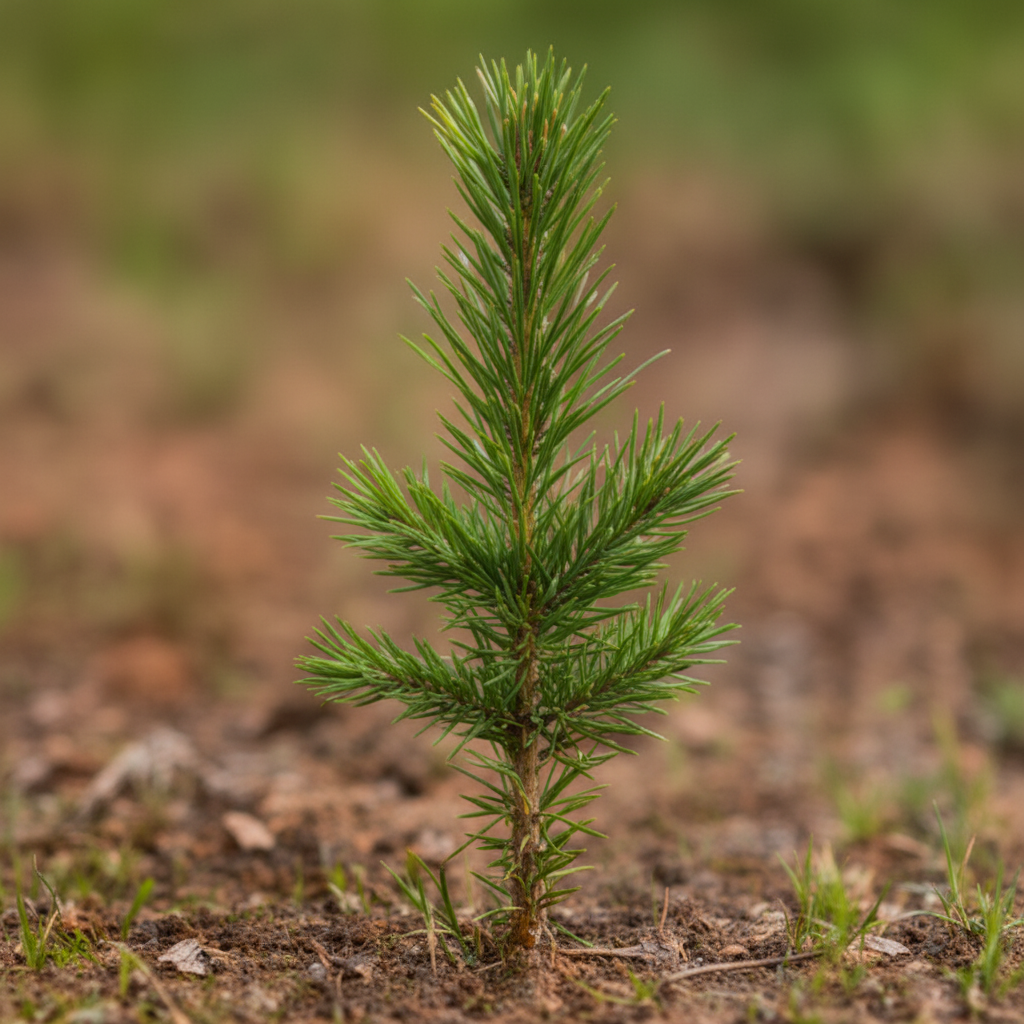
Maritime pine (Pinus pinaster)
Couldn't load pickup availability
Maritime pine is a large, fast-growing conifer reaching 20–30 meters, notable for its robust appearance and exceptional drought tolerance. It forms a wide crown, and its long needles (12–25 cm) grow in dense, bright-green clusters.
The trunk is thick, reddish-brown and often deeply furrowed – a typical feature of a tree that has been part of Atlantic coastal forests for centuries.
Natural range
The maritime pine originates from southwestern Europe, particularly:
-
the Atlantic coast,
-
France, Spain and Portugal,
-
naturally sandy and very dry regions.
It is perfectly adapted to the warm, windy and nutrient-poor environment of coastal dunes.
Recommended uses
This species is ideal for places where extreme drought and sand are the rule rather than the exception:
✔ extremely dry sites
✔ sand dunes and coastal habitats
✔ reclamation of degraded soils
✘ not suitable for heavy, clayey or waterlogged soils
It is one of the most reliable trees for areas where most other species fail.
When to plant
Recommended planting time:
-
spring, when young plants have the best chance to root quickly.
Growing conditions
The maritime pine has clear preferences based on its natural habitat:
-
thrives in sand, dry and light soils
-
tolerates long periods without rain
-
cannot withstand frost below –12 °C – suitable only for warmer regions
-
extremely wind-resistant, including strong coastal gusts
-
requires full sun
It is ideal for stabilizing and greening landscapes in warm, dry climates.
Ecological benefits
The maritime pine plays a crucial ecological role in coastal regions:
-
stabilizes and fixes sand dunes, protecting coasts from erosion
-
helps restore degraded ecosystems
-
acts as a pioneer species, enabling colonization by other plants
-
provides shelter and food for many bird and insect species
It is a key tree for reclamation projects, restoration of dry habitats and stabilizing landscapes in warm regions.